Posted on 03 May,2026
Quality Management System (QMS) in ISO 15189
A Quality
Management System (QMS) in ISO 15189 is a structured framework that ensures
medical laboratories consistently deliver accurate, reliable, and timely test
results while maintaining patient safety and regulatory compliance. ISO
15189:2022 emphasizes a process-based, risk-driven, and patient-focused approach
to quality management, aligning closely with modern healthcare needs and
international best practices.
At its
core, the QMS integrates all laboratory activities, including administrative,
technical, and managerial processes. It ensures that every step of the total
testing process—from pre-examination (sample collection and handling),
examination (testing and analysis), to post-examination (reporting and
interpretation)—is controlled, standardized, and continuously improved. This
holistic approach minimizes errors and enhances overall laboratory performance.
One of
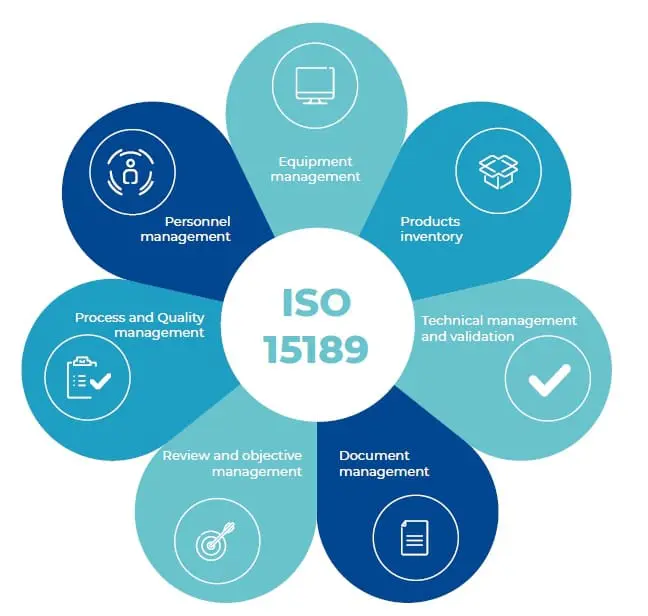
the key elements of QMS in ISO 15189 is documented information and document
control. Laboratories are required to maintain controlled documents such as
quality manuals, standard operating procedures (SOPs), policies, and records.
Proper version control, authorization, and accessibility of documents ensure
consistency in operations and prevent the use of outdated procedures.
Another
critical component is risk management. ISO 15189:2022 introduces a
strong focus on risk-based thinking, requiring laboratories to identify
potential risks and opportunities that may affect the quality of results. This
includes risks related to sample handling, equipment failure, human error, or
data management. By proactively addressing these risks, laboratories can
prevent errors rather than reacting to them after occurrence.
Leadership
and management commitment play a vital role in the successful implementation of QMS. Top
management is responsible for establishing quality policies, defining
objectives, and ensuring the availability of resources. They must also promote
a culture of quality and continuous improvement within the laboratory.
The competence
and training of personnel are integral to QMS. Laboratories must ensure
that all staff members are qualified, trained, and regularly assessed for
competence. Defined roles and responsibilities, along with continuous
professional development, ensure that personnel can perform their duties
effectively and maintain high-quality standards.
Process
control and standardization are essential features of the QMS. Laboratories must validate and
verify test methods, monitor environmental conditions, and ensure proper
calibration and maintenance of equipment. The concept of metrological
traceability ensures that measurement results are linked to recognized
standards, enhancing the reliability and comparability of test results.
Quality
assurance activities such as Internal Quality Control (IQC) and
participation in External Quality Assessment (EQA) or Proficiency Testing
(PT) programs are mandatory under ISO 15189. These activities help
laboratories monitor the accuracy and precision of their results and identify
any deviations or trends that require corrective action.
The QMS
also includes mechanisms for handling nonconformities and corrective actions.
When deviations from established procedures occur, laboratories must
investigate the root cause, implement corrective measures, and take preventive
actions to avoid recurrence. This systematic problem-solving approach
strengthens the overall quality framework.
Internal
audits are
another important requirement. Laboratories must periodically audit their
processes to ensure compliance with ISO 15189 requirements and internal
policies. Audit findings provide valuable insights into areas that need
improvement and help maintain readiness for external assessments.
Management
review is a key
aspect of continual improvement. Top management must regularly review the
effectiveness of the QMS, considering audit results, quality indicators,
customer feedback, and performance data. Based on this review, strategic
decisions are made to improve processes and achieve quality objectives.
ISO 15189
QMS also emphasizes customer focus and patient care. Laboratories must
monitor customer satisfaction, address complaints effectively, and ensure timely
delivery of results. Key performance indicators such as turnaround time (TAT),
error rates, and service quality are continuously monitored to enhance patient
outcomes.
In
today’s digital environment, information management is an essential part
of QMS. Laboratories must ensure the integrity, confidentiality, and security
of patient data. The use of Laboratory Information Management Systems (LIMS)
helps streamline data handling, reduce manual errors, and improve operational
efficiency.
Another
important aspect is continual improvement. ISO 15189 encourages
laboratories to adopt a culture of ongoing enhancement through quality
indicators, audits, feedback, and innovation. This ensures that the laboratory
remains adaptive to changing technologies, regulatory requirements, and patient
needs.
In
conclusion, the Quality Management System in ISO 15189 provides a comprehensive
framework for ensuring excellence in medical laboratory services. By
integrating risk management, process control, personnel competence, and continual
improvement, the QMS ensures that laboratories consistently deliver accurate
and reliable results. Ultimately, it supports better clinical decision-making,
enhances patient safety, and contributes significantly to the overall quality
of healthcare services.